The first day after the holidays always feels a little strange. The alarm clock rings, a sound you’ve barely heard in two weeks, and you blink at the ceiling, wondering if your internal calendar is lying to you. Outside, the world seems quieter than usual, like it’s still wrapped in the slower rhythm of the days just past.
You might be returning from a family vacation, with sand still clinging to your sneakers from those beach walks you swore were “exercise enough.” Or maybe you had a winter cabin week with friends, where your biggest workout was chopping wood and carrying hot cocoa mugs from the kitchen to the couch. Or perhaps you spent the time alone, the days folding in on themselves in a blissful tangle of late breakfasts, long novels, and that delicious feeling of being free from schedules.
Whatever your holidays looked like, one thing is certain: you stepped out of your usual training routine. And that’s not only okay, it’s essential.
Why Rest Isn’t Just “Okay” … It’s Vital
We often treat rest as a guilty pleasure. In our productivity-driven culture, slowing down can feel like slacking. But physiologically, rest is when your body does some of its best work.
When you train, whether you run, lift, or follow a high-energy cardio session, you create tiny amounts of stress on your muscles, bones, and cardiovascular system. That’s by design. Your body responds to this stress by adapting: muscles repair and grow, bones strengthen, and your heart and lungs get more efficient. But the magic of adaptation happens between workouts, not during them.
Insufficient recovery can lead to plateaued performance, higher injury risk, and even suppressed immune function.¹ And beyond the purely physical, rest allows your brain to recalibrate. Stepping away from structured training reduces mental fatigue and keeps motivation high for the long term.
So if you spent your holiday mornings sleeping in instead of sweating through intervals, you may have done yourself a bigger favor than you realize.
The Gift of Disconnecting
One of the most powerful things about holidays, whether you spend them with a noisy crowd of relatives or completely alone, is the freedom from commitments. No rushing to make it to your evening spin class after work. No guilt about skipping that Sunday long run because you had brunch plans. You’re untethered from the clock.
That mental break matters. A 2021 study in Psychology of Sport and Exercise found that athletes who took regular mental rest periods from structured training were more likely to sustain long-term exercise habits without burnout.² Simply put: stepping back occasionally can help you stay consistent over the years.
And while it’s tempting to think you “lost” progress during your break, here’s some comforting science: most trained individuals maintain significant fitness capacity even after two to three weeks off.³ Your body doesn’t forget as fast as you fear. The return might feel a little sluggish at first, but your baseline is still much higher than when you first began.
Small Steps Back Into Movement
Now comes the tricky part: easing back into training without overwhelming yourself. This is where a lot of people fall into the “all or nothing” trap, setting ambitious resolutions, only to abandon them when the first hiccup hits.
Here’s the truth: small doses of activity are far better than none at all. And sometimes, just ten minutes can change your mood and set you on a positive path for the day. Short bouts of moderate activity (as little as 10 minutes) can significantly improve mental well-being and boost energy levels.⁴ You don’t need to run a 10K or do a 90-minute lifting session to feel the benefits. A brisk walk around the block, a few rounds of bodyweight squats and push-ups, or a quick stretch can flip your mental switch from sluggish to engaged.
Example: The 5 Minute Morning Reset
- 1 minute: March in place or walk briskly around your home.
- 1 minute: 10 squats, 10 push-ups (modified or wall push-ups if needed)
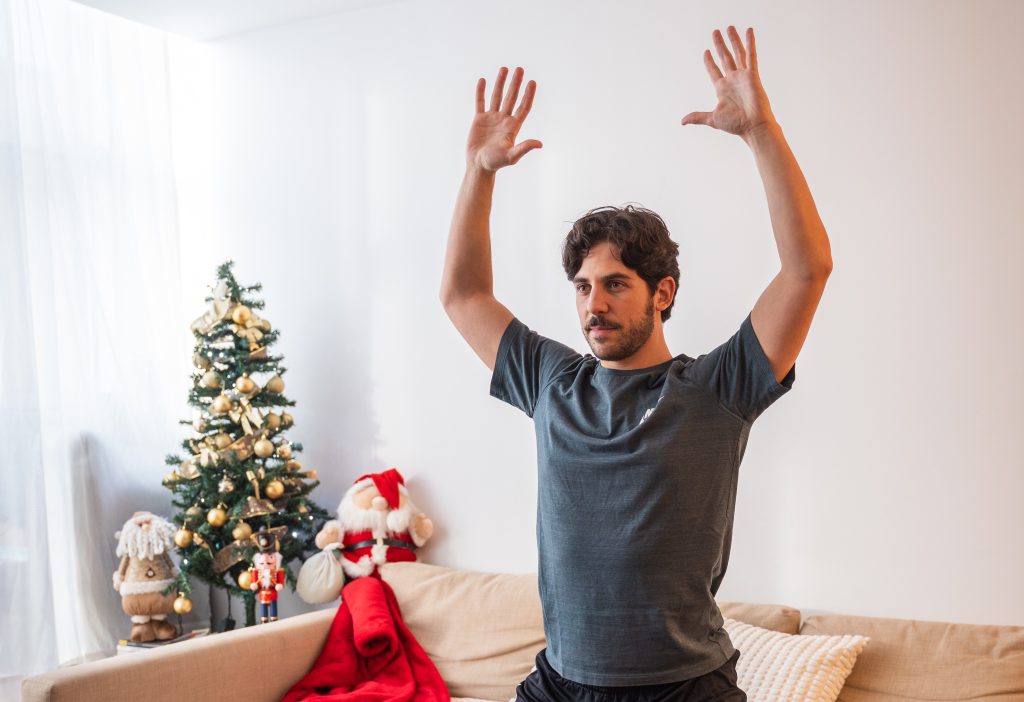
- 1 minute: Standing side bends, gentle torso twists.
- 1 minute: Plank hold (or modified), alternating with glute bridges.
- 1 minute: Deep breathing, reaching arms overhead, then folding forward.
You’ve now moved every major muscle group, elevated your heart rate, and sent a “wake up” signal to your nervous system, all before your coffee.

Respecting Your Own Rhythm
A common pitfall when returning to training is comparing your current self to your “best self”, the version that ran faster, lifted heavier, or trained more frequently. That comparison can make today’s effort feel small and discouraging.
Here’s a radical idea: your “best” self is the one who shows up now, in your current circumstances. Whether that means a 30-minute workout three times a week or a ten-minute stretch on busy days, it counts.
Respecting your rhythm means:
- Listening to your energy levels, not forcing intensity when you’re still recovering from travel or disrupted sleep.
- Adjusting for life’s real constraints, kids’ school schedules, work deadlines, or simply the winter weather.
- Letting go of the imaginary audience in your head who “expects” you to train a certain way.
Movement is not a performance for others. It’s a gift to yourself.
From Story to Science: Why Regular Activity Matters
Let’s zoom out for a moment. Beyond performance goals, the consistent inclusion of physical activity in daily life has profound health benefits.
The World Health Organization recommends at least 150 minutes of moderate-intensity aerobic activity per week, or 75 minutes of vigorous activity, plus two strength sessions.⁵ That might sound like a lot, but when you break it down, it’s just 21 minutes a day. And even if you don’t hit those numbers right away, every bit you do still counts toward better health.
Regular activity:
- Reduces the risk of cardiovascular disease by up to 35%.⁶
- Lowers the likelihood of type 2 diabetes by up to 40%.
- Improves mood, reduces symptoms of anxiety and depression, and enhances sleep quality.
The message from decades of research is clear: some activity is vastly better than none, and more brings more benefit, but starting small is not only fine, it’s often the smartest path to building a habit.
Making the Return Easier … and Funnier!
Re-entry into training doesn’t have to be a solemn vow in a crowded gym on January 2nd. It can be playful, experimental, and flexible.
Some ideas to spark your return:
- Micro-workouts during the day: Five minutes of stair climbing at work, a set of lunges while your coffee brews, and stretching before bed.
- Activity dates: Invite a friend for a walk instead of coffee, or walk to the coffee shop together.
- The “floor rule”: Anytime you find yourself on the floor (playing with kids, watching TV), do 5 push-ups, sit-ups, or stretches before getting up.
- Use Erakulis app for quick wins: The Erakulis app offers short, effective strength and cardio workouts, plus simple stretching sessions you can do anywhere, perfect for breaking the “I don’t have time” excuse.
The Mindset Shift That Makes All the Difference
Instead of thinking, “I have to get back in shape”, try “I get to move again.” That tiny shift reframes exercise from an obligation to an opportunity, one that improves your energy, mood, and long-term health.
Remember, the goal isn’t to “undo” the holidays. You’re not paying for rest; you’re building on it. Your body and mind are ready to work with you, not against you.
Your Return, Your Way
Whether your holiday was chaotic with kids, rich with late-night laughter among friends, or quietly solo, the transition back into training is a personal journey. There’s no single right pace.
The important thing is to start, gently, consistently, without self-judgment. Let the process be an extension of the joy, connection, and rest you found during your break.
And when in doubt? Move for ten minutes or pick a quick Erakulis workout. That’s all it takes to remind yourself: you’re back in motion.
The content of this article is for informational purposes only and reflects the personal opinions of the authors. It’s not intended to replace professional advice, whether nutritional or otherwise. Before making any decisions based on what you read here, we recommend consulting with a qualified expert in the relevant field.